

By Richard Croxford, Copywriter, UK
I’m going to be honest – I’ve had writer’s block for about a week now.
For the first time in months, I don’t know what to write about.
I thought about doing an easy book review but I find them boring – and I’m sure you do too.
I wondered about covering some theory of marketing, some high-brow topic, but no inspiration would come.
So here I sit, at my desk, on a Friday morning, trying to work out what I’m going to talk about this week.
I’ve decided to follow one of my favourite authors, Charles Bukowski’s advice: “Writing about a writer’s block is better than not writing at all.”
My experience of writer’s block
There are probably thousands of definitions of the term and I imagine every writer experiences it in their own way.
Personally, I disagree with the Wikipedia definition:
“Writer’s block is a non-medical condition, primarily associated with writing, in which an author is either unable to produce new work or experiences a creative slowdown.
“Writer’s block has various degrees of severity, from difficulty in coming up with original ideas to being unable to produce work for years.”
Where’s the emotion in that? When I experience writer’s block it certainly doesn’t feel as black and white as the above definition.
Rather, it’s a gnawing, biting, spikey feeling that I experience in the back of my brain – somewhere between the nape of my neck and the top of my skull, about half an inch below the skin.
“Writer’s block is another name for writer’s dread—the paralyzing fear that our work won’t measure up.”
Barbara Kingsolver
It’s a voice whispering: “You’ve got work to do” or “you haven’t done enough this week” or “why are you such a shit writer? – I bet Camus, Kafka and Bukowski didn’t get writer’s block, like you.”
(Like so many of the voices we often hear spoken by our subconscious, it’s not a very nice one).
Is it just me?
Unfortunately, I’m not like the great marketing guru, Seth Godin, who claims: “I write like I talk and I don’t get talker’s block.”
(I’ll admit, I suffer from both conditions and often find myself struggling for spoken words when I’m tired or stressed).

Judging by the shear number of authors who have given comment on this subject, this is a prevalent issue.
It must be the case that copywriters struggle with the same thing on the same scale too, right?
For my own ego and self-assurance, I will proceed on the assumption that I am not the only one. To do otherwise would probably result in my immediate giving up of the writing dream and going back to bartending.
So, how do we combat writer’s block?
As you can tell, I’m in no way an expert on this – I’m writing this article to try to solve the problem in the first place.
But I seem to have cured my own blockage, at least for a time.
Writing this article has genuinely helped. I think I know what I’m going to write about for next week and the fear of putting pen to paper has, for the moment, dissipated.
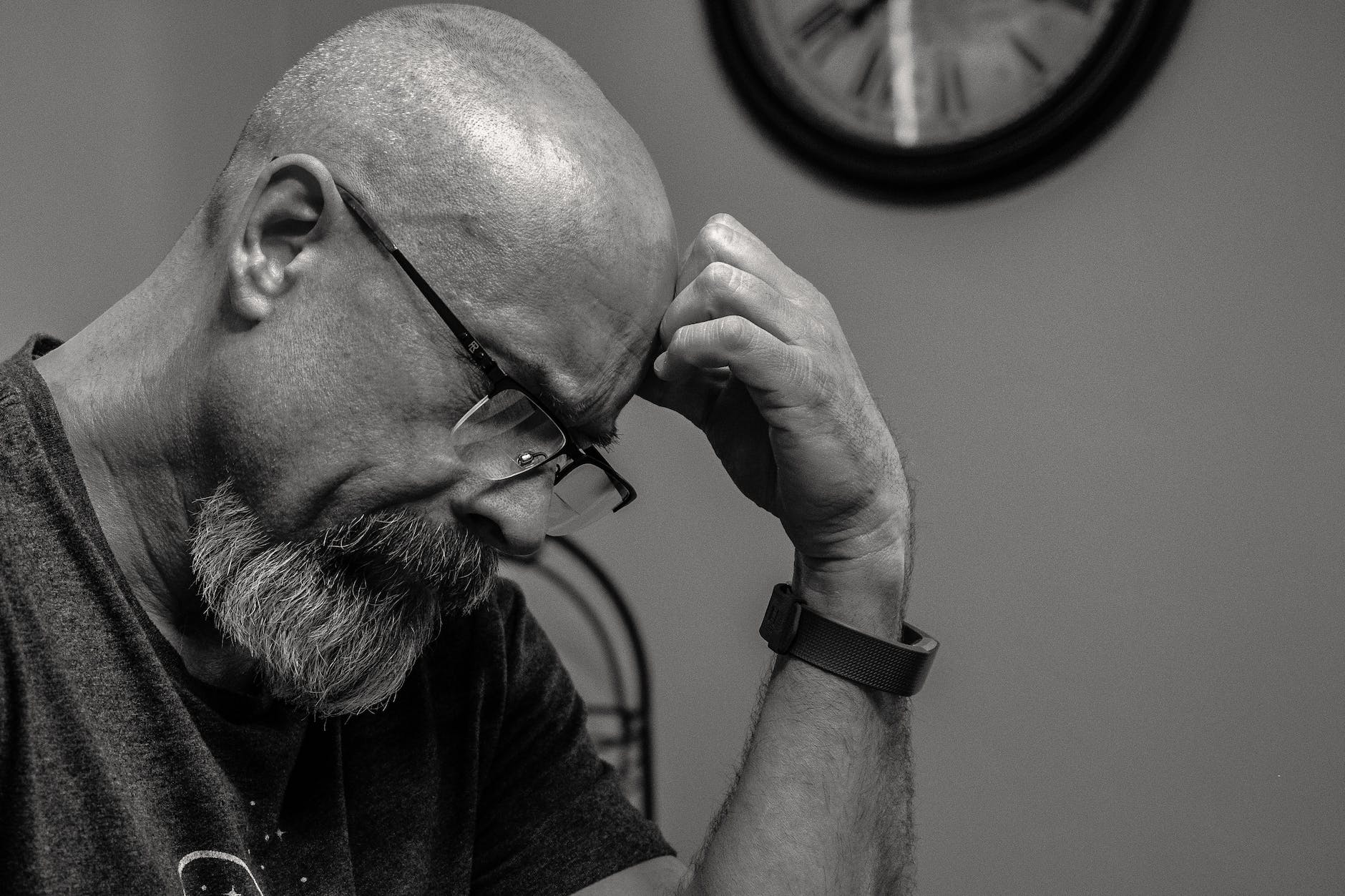
This has worked for me – just writing something, anything – and letting my brain spill out onto the page in a bit of a monologue.
Maybe it will work for you too. Maybe not.
When in doubt, perhaps we should turn to the experts, the writers who have given quotes on the subject. Here are some of my favourites:
“Beat it into submission. That’s the only way. How would you get rid of runner’s block? You go for a fucking run.”
Ryan Holiday
“Resistance never sleeps. It never slackens and it never goes away. The dragon must be slain anew every morning. However, as with anything in life, if you’ve succeeded in the past, at least you know that you can succeed.”
Steven Pressfield
“Writer’s block’ is an emotional or logical incoherence in a future work slowly working its way through our unconscious.”
Alain de Botton
“I don’t believe in ‘writer’s block.’ I try and deal with getting stuck by having more than one thing to work on at a time. And by knowing that even a hundred bad words that didn’t exist before is forward progress.”
Neil Gaiman
I include those quotes to show the diversity of opinion, even amongst writers, about writer’s block.
In whatever way you deal with it, whatever works for you, it’s ok. Personally, I like to write crummy little articles like this one, but if you prefer to tie yourself to your chair and shove pins in your eyes until you can find the right word, more power to you man.
Whatever works for you, works for you.
(Now, onto the next article…)
If you enjoyed these ramblings, please subscribe. Or, you can find me on LinkedIn where I post plenty more writing and marketing content!




 Absurd Insights
Leave a comment